Building an AI Travel Agent
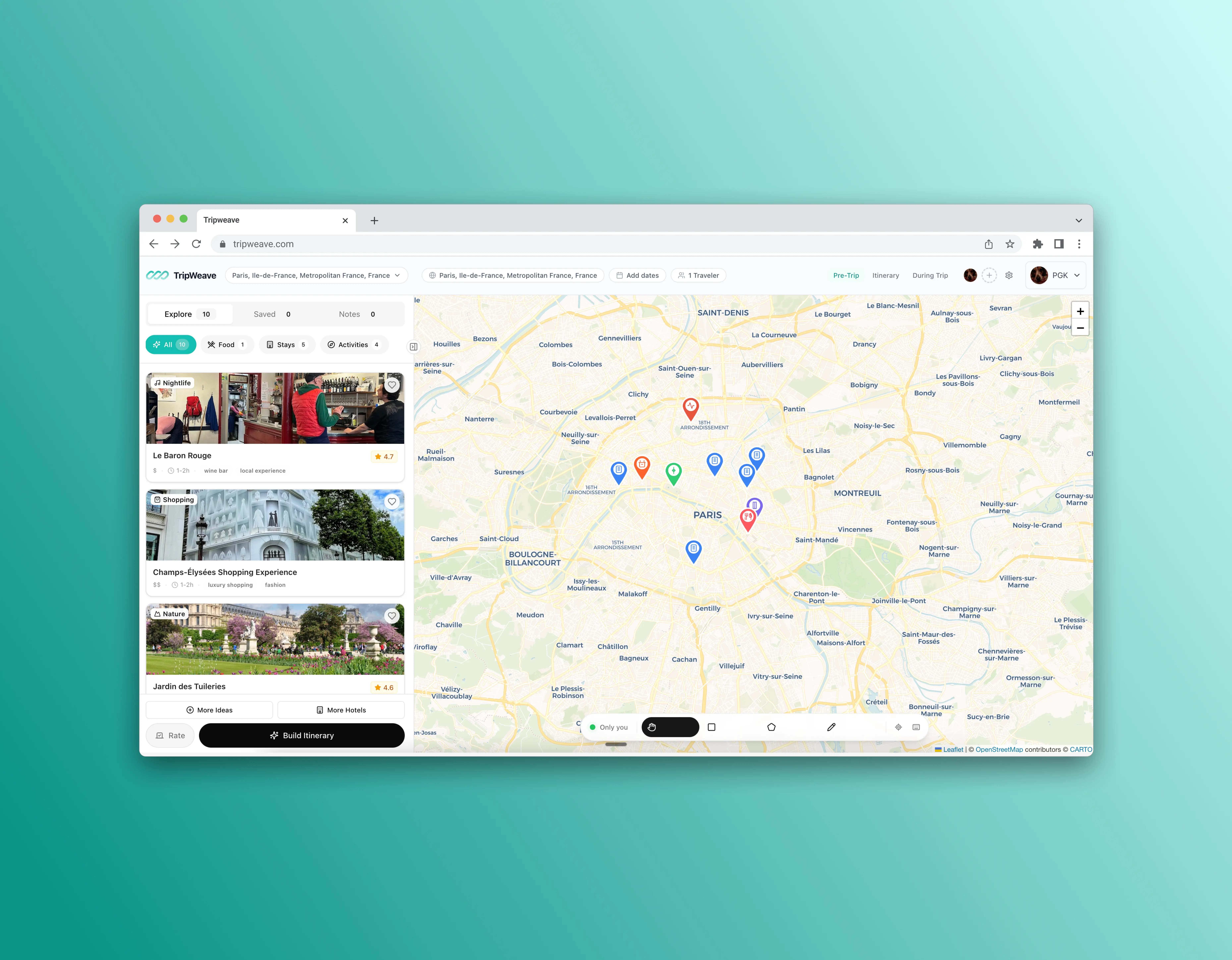
TripWeave is a hackathon project with the goal of building an AI powered app that can replace the 7โ8 apps travelers juggle to plan a trip. Users vote on collected ideas with their travel party, and multiple AI agents weave them into a well organized itinerary.
I am one of two designers on a team of 5 engineers. For this phase of the user experience, I worked directly with engineers to translate data structures into UI, define interaction patterns, and ship a working prototype.
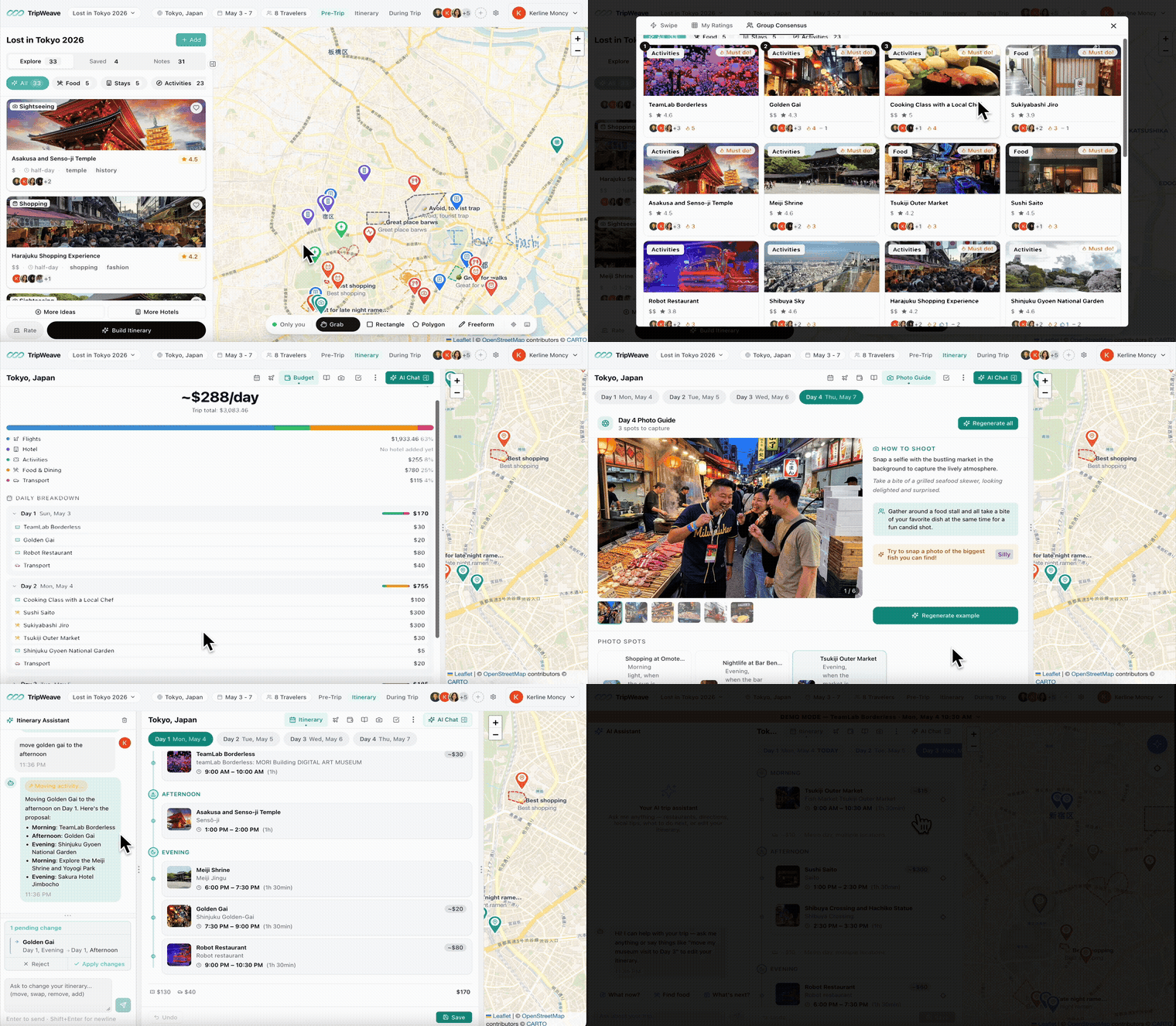
I designed the split-view layout (chat + itinerary + map), and established the core interaction model: AI suggests, user approves.
Client:
Gridion Hackathon
My Role:
Product Designer
Year:
2025-Now
Service Provided:
UX/UI Design
Itinerary Builder
Phase 2, the "Itinerary Builder," tackled a core tension: AI-generated schedules are efficient, but users don't trust what they didn't build. The challenge was designing an editing model where users felt in control without breaking the AI's optimizations.
Figma MCP
To accelerate design-to-code handoff, I explored Figma MCP (Model Context Protocol) with Claude Code, an emerging workflow that lets AI read design files and generate working prototypes.
Rather than manually translating wireframes into specs, I used this pipeline to produce an interactive HTML/CSS prototype directly from my Figma layouts.
This reduced back-and-forth with engineers and gave the team something functional to test against earlier in the process. It's still experimental, but it pointed toward a future where designers ship working code without waiting on engineering bandwidth.

